
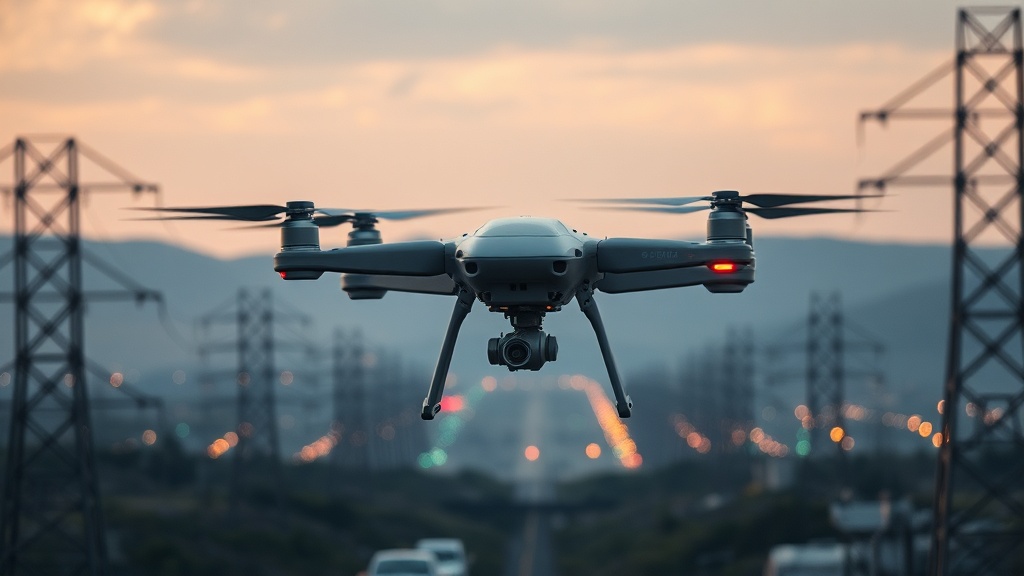
Autonomous Systems for Critical Infrastructure Protection
Critical infrastructure—power grids, water systems, and communications networks—requires advanced protection. Autonomous systems offer persistent, intelligent monitoring and threat response.
Critical infrastructure is the backbone of modern society. Power generation and distribution, water treatment and delivery, communications networks, and transportation systems are fundamental to national security and public welfare. Yet these systems remain vulnerable to evolving threats.
The Protection Challenge Traditional security approaches rely on:
- Physical barriers and human patrols
- Centralized monitoring and delayed response
- Static deployments unable to adapt to threat changes
- High operational costs and personnel requirements
These approaches are increasingly insufficient in the face of sophisticated adversaries and the sheer scale of infrastructure to protect.
Autonomous Solution Architecture Advanced autonomous systems provide persistent, intelligent protection:
Persistent Awareness Autonomous platforms can operate continuously, providing 24/7 monitoring without the fatigue and cost limitations of human operators. Multi-spectrum sensors detect threats across thermal, optical, and RF domains.
Intelligent Response AI-powered decision systems classify threats in real-time, enabling rapid escalation of response protocols. The system learns patterns over time, improving threat detection accuracy.
Adaptive Deployment Rather than fixed patrol routes, autonomous systems can be dynamically tasked to high-priority areas based on real-time intelligence.
Operational Efficiency A single operator can manage multiple autonomous platforms, dramatically reducing personnel requirements while extending coverage.
Deployment Examples
- Grid perimeter monitoring to detect unauthorized access
- Water treatment facility surveillance to prevent contamination
- Transportation hub monitoring for explosive devices
- Communications infrastructure protection
The future of critical infrastructure protection lies in the integration of autonomous sensing, intelligent decision-making, and coordinated response.