
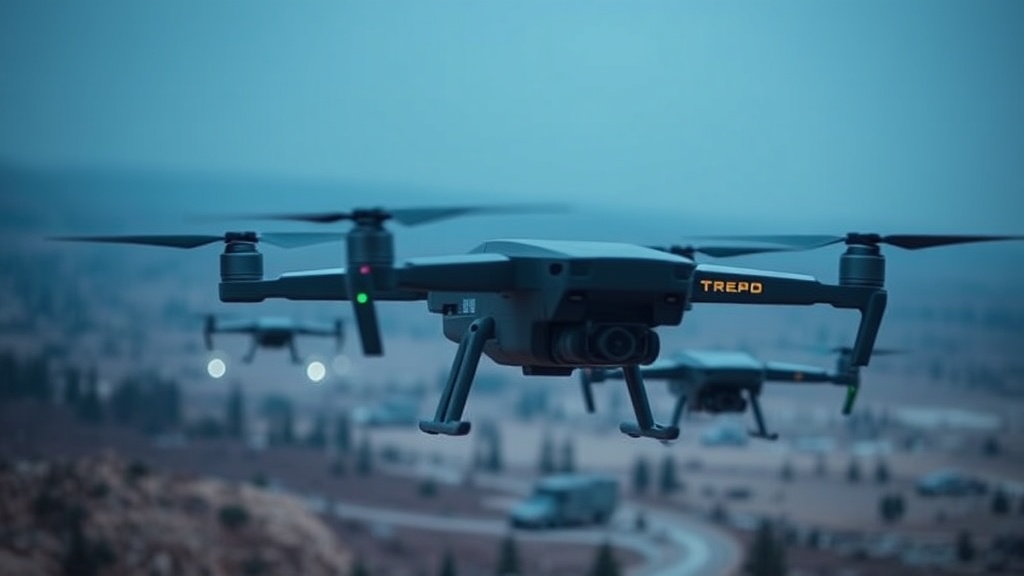
Swarm Autonomy in Defense
Explore how autonomous drone swarms are revolutionizing defense capabilities, enabling coordinated operations at scale and redefining military strategy.
Autonomous drone swarms represent a paradigm shift in defense technology. Unlike traditional systems that rely on centralized control and manual coordination, swarm autonomy enables multiple unmanned platforms to operate independently while achieving collective objectives.
Key advantages of swarm autonomy include:
Scalability and Resilience Swarms can scale from a few drones to hundreds of platforms without degradation in performance. The distributed architecture means the loss of individual units does not compromise the overall mission, creating inherent redundancy and resilience.
Reduced Latency By eliminating the need for constant communication with a central command center, autonomous swarms can make real-time tactical decisions at the edge. This dramatically reduces latency in threat response and decision execution.
Enhanced Coverage Multiple autonomous platforms working in concert can cover vastly larger areas than traditional systems, providing superior situational awareness and enabling more effective area denial and protection.
Force Multiplication With minimal operator input, small teams can manage large-scale autonomous operations, effectively multiplying their tactical capabilities and reducing personnel requirements.
The future of defense lies in systems that combine human strategic judgment with autonomous tactical execution, enabling faster, more effective responses to emerging threats.